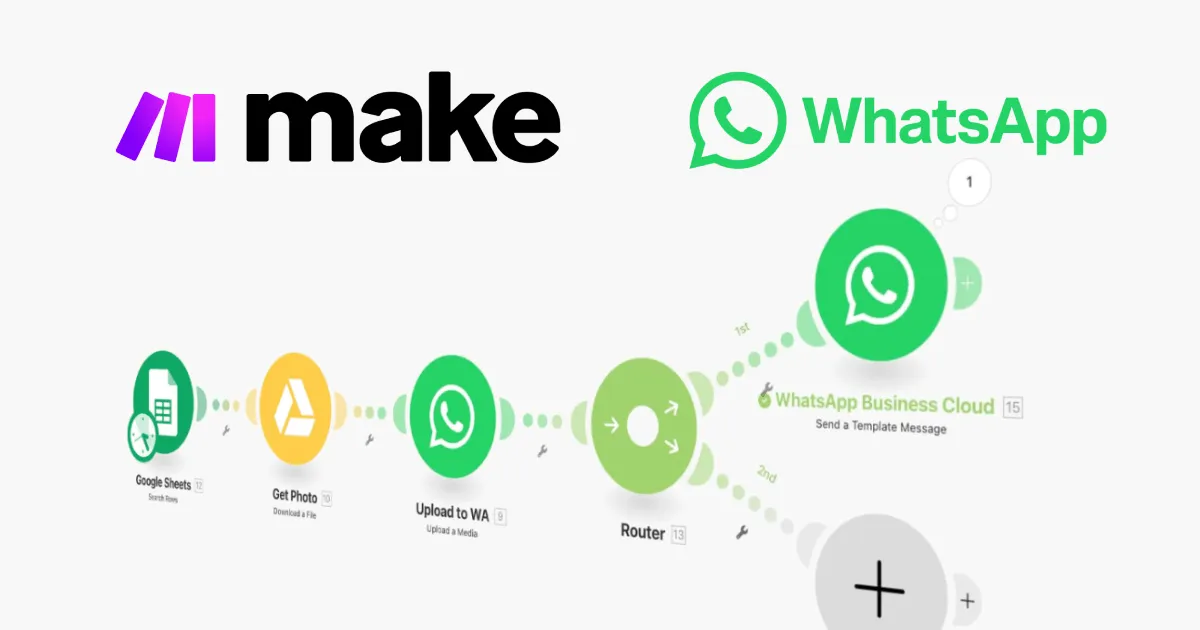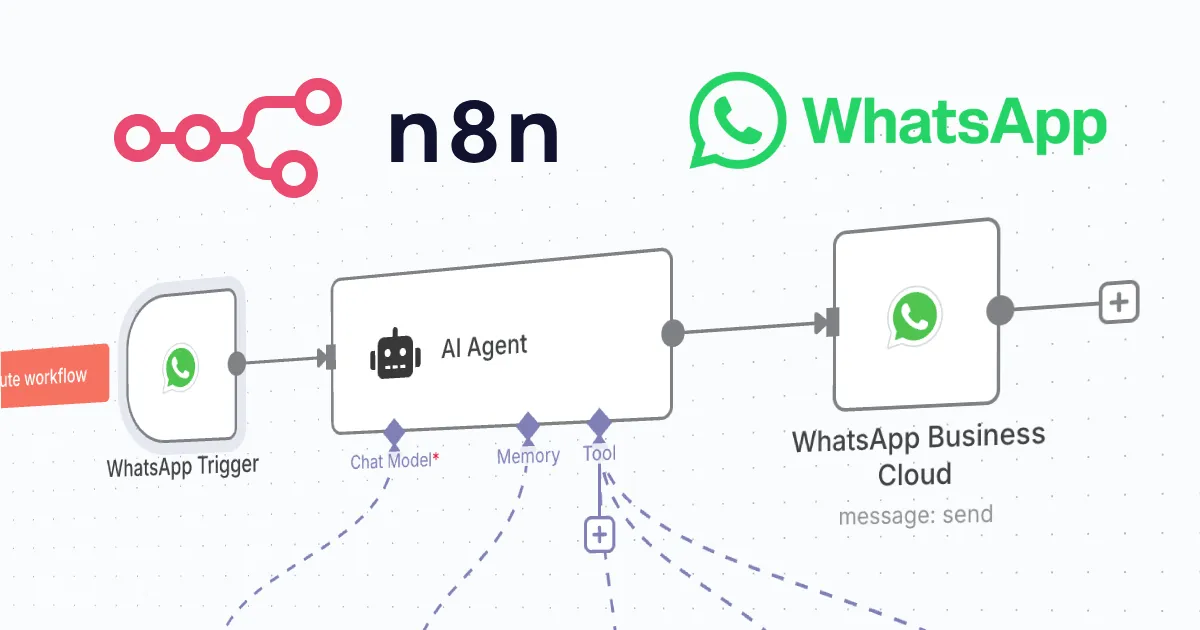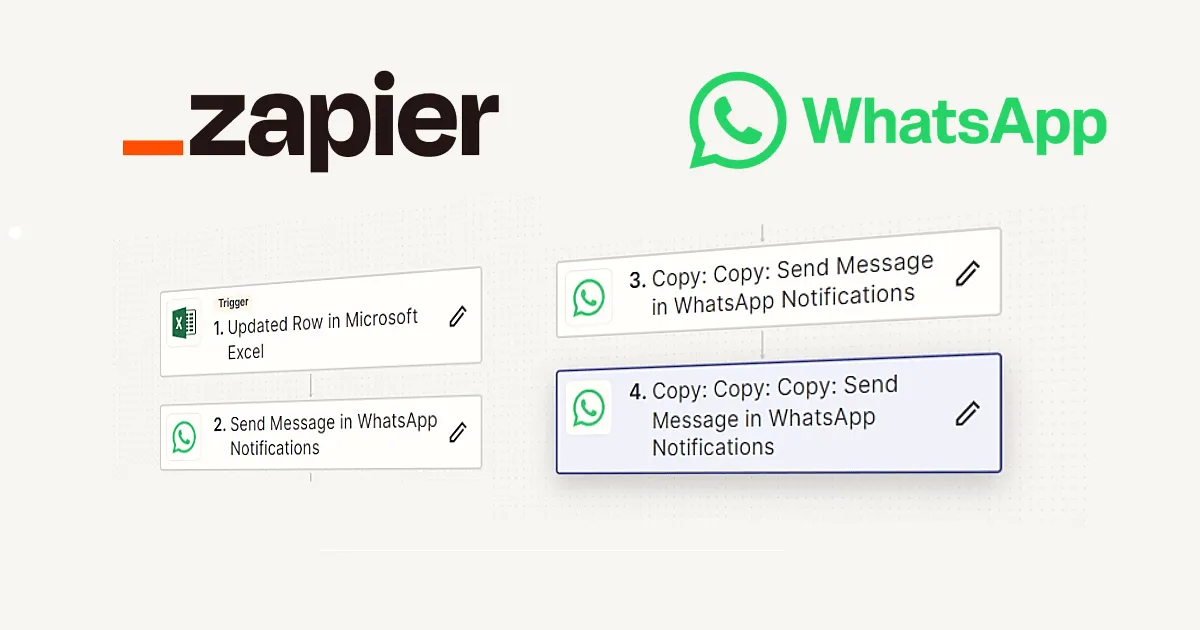
Zapier is the best-known no-code automation service, with the largest app catalogue of any tool of its kind. Its official WhatsApp Business Cloud integration lets you connect WhatsApp (through Meta’s official Cloud API) to thousands of other apps without writing code or running a server. If your organisation qualifies for the official API, this is a compliant, ban-safe way to send notifications and build a simple chatbot. Prefer to self-host, or want to keep your data in-house? See our companion guide on automating WhatsApp with n8n. Want more visual power at a lower price? See automating WhatsApp with Make.
How Zapier connects to WhatsApp
Zapier automations are called Zaps. Each Zap has one trigger (an event that starts it) and one or more actions (what happens next). WhatsApp shows up on both sides through the official WhatsApp Business Cloud app in Zapier:
- Triggers, start a Zap when a new WhatsApp message arrives, so you can react automatically.
- Actions, “Send Template Message” to start a conversation with an approved template, and “Send Message” to reply with free-form text inside an open session.
What you need first
Because this uses the official API, there is real setup: a Meta Business account, a WhatsApp Business Cloud app in the Meta for Developers dashboard, a phone number for the API, and access credentials. This is also where eligibility matters, Meta restricts some uses, and political/electoral messaging in particular is frequently not permitted. We cover that in How can a Political Party use WhatsApp Business API?. Everything else runs in Zapier’s cloud, so there’s nothing to install or maintain.
Step 1: Connect WhatsApp to Zapier
In Zapier, add a WhatsApp Business Cloud step and connect your account by authorising it with your Meta credentials (access token and phone number ID). Zapier stores the connection so you can reuse it across every Zap.
Step 2: Send a template message from another app
The official API only lets you start a conversation with a pre-approved template. A typical Zap uses another app as the trigger (a new row in Google Sheets, a paid order, a form submission) and a WhatsApp Business Cloud → Send Template Message action. Map fields from the trigger (a name, an order number) into the template’s variables, and Zapier sends a personalised, compliant message. This is how you automate reminders, confirmations and opt-in updates.
Step 3: Reply within the 24-hour window
Once someone messages you, a 24-hour customer service window opens in which you can send free-form (non-template) messages. Use the WhatsApp New Message trigger to catch the inbound message, then a Send Message action to reply with plain text, no template needed while the window is open.
Step 4: Build a simple chatbot
- Start the Zap with the WhatsApp New Message trigger.
- Add Paths to branch on what the message says, or an AI step (Zapier has built-in AI actions) to work out the intent.
- Look up anything you need from another app, a spreadsheet, a CRM, a knowledge base.
- Reply with a Send Message action, and route anything the bot can’t handle to a human.
Zapier, n8n or Make?
Choose Zapier when you want the widest choice of app integrations and a fully hosted service with nothing to maintain, it’s the quickest way to wire WhatsApp to the rest of your stack. Choose n8n if you’d rather self-host and keep your data in-house, or Make if you want a more visual, branching canvas at a lower price. All three connect WhatsApp through the same official Cloud API; they differ in hosting, pricing and how you build. For a fully managed official-API experience with a team inbox, see Wati.
Frequently asked questions
Does Zapier have a WhatsApp integration?
Yes. Zapier has an official WhatsApp Business Cloud integration with a trigger for incoming messages and actions to send template and free-form messages, all using Meta’s official Cloud API.
Why do I need message templates?
The official API requires a pre-approved template to start a conversation. After the person replies, a 24-hour window opens in which you can send free-form messages without a template.
Is Zapier free?
Zapier has a free tier for simple, low-volume automations; paid plans are priced by how many tasks you run each month. Separately, Meta charges for the WhatsApp Business API on a per-conversation basis. Check both providers’ current pricing.
Can I self-host Zapier?
No, Zapier is a cloud-only service. If you need to run automation on your own server to keep data in-house, use n8n instead.