Ever get a meme or link on WhatsApp that looks harmless, then realize it is subtly pushing a political line? WhatsApp has become one of the places where far-right movements do exactly that, turning everyday chats into a recruiting tool.
Because it puts people in direct contact, it works well for moving someone from a general community chat into more radical circles. What begins as harmless exchanges gradually steers people toward extremist views.
The far-right approach builds an ecosystem of groups, channels, bots and community networks. It draws people in through general-interest groups, which slowly shift toward far-right narratives.
The ecosystem: groups, channels and bots
That shift feeds recruitment into tighter groups, where members meet more radical content and calls to act, orchestrated online hate campaigns, or a move to platforms like Telegram with less moderation.
How the funnel works
- Start a local group: open a community or interest group to attract people who aren’t political.
- Shift the narrative slowly: once the group gels, introduce and amplify far-right topics.
- Move to private channels: pull the most engaged into more secretive groups for indoctrination and action plans.
- Coordinate across platforms: move members to Telegram and Discord, which restrict content less.
How Jair Bolsonaro used WhatsApp to win the elections in Brazil
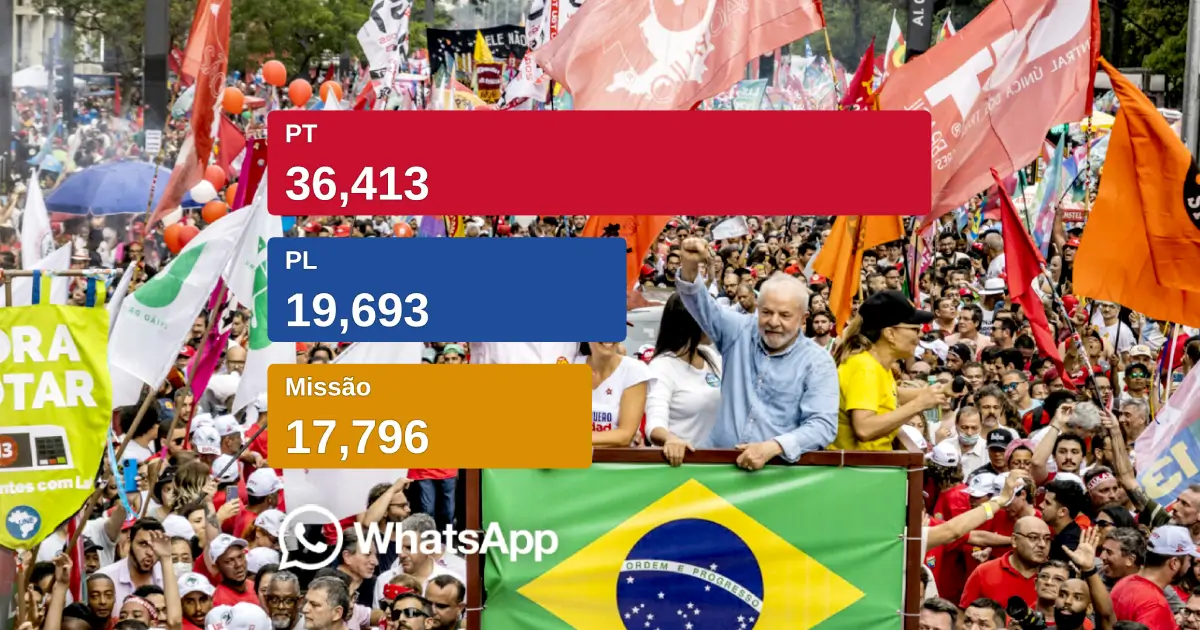
In Brazil, Jair Bolsonaro’s campaign showed how far WhatsApp could be pushed for political gain. Organized like a pyramid of communication, his supporters spread fake news and incendiary stories that shaped how many Brazilians voted.
In the run-up to the election, WhatsApp let the campaign go around traditional media, and false stories about Bolsonaro’s opponent spread unchecked. It mobilized support and left behind a network of politically active users pushing his agenda.
Groups tied to Bolsonaro worked as echo chambers where misinformation moved fast. They pulled people in with general-interest chat that slowly pivoted to far-right ideas, drawing them into more secretive, more extreme groups.
After the election, these groups didn’t disband, they became bases for ongoing support and radicalization. You can see the result not just in the win, but in how much more polarized Brazilian politics became.
Spain: VOX and media mimicry
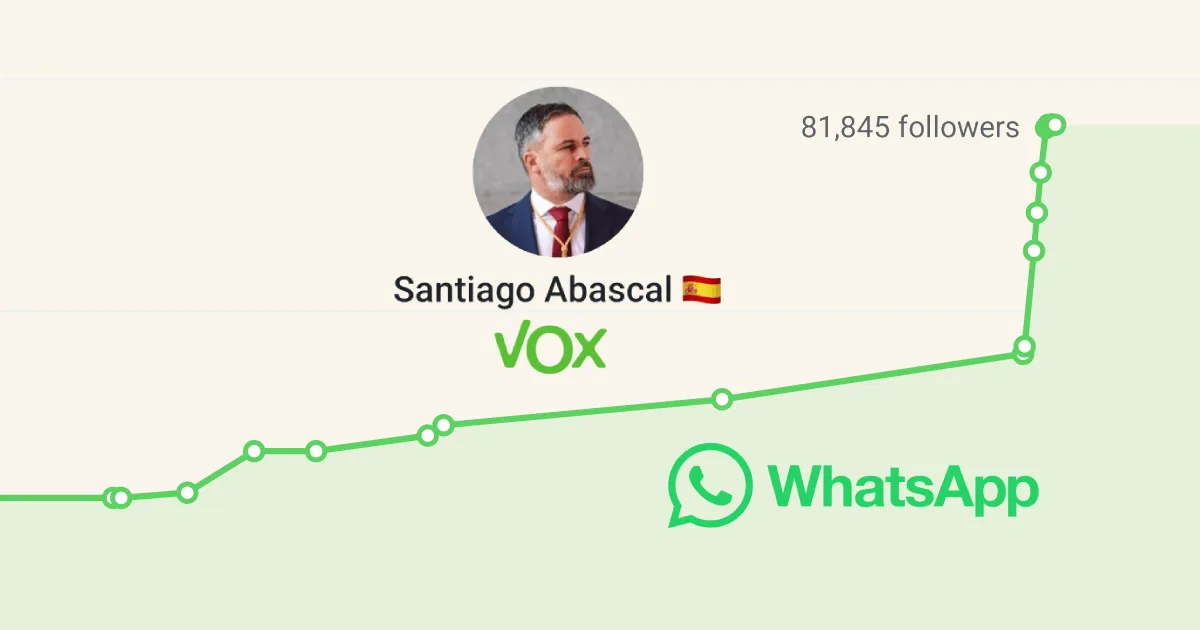
Spain’s far-right party VOX took a similar route with a twist: instead of just spreading content, it built an ecosystem that imitated real news media to make its narratives look credible.
Through a platform called Herqles, VOX tried to manufacture the look of broad support, running street interviews with supposedly ordinary citizens who in fact delivered scripted right-wing lines. It dressed extremist views up as mainstream common sense.
Alongside that, the Spanish far-right used WhatsApp to spread fake news and petitions against progressive laws.
Content tactics
- Misinformation: false reports and fake news to shape opinion.
- Memes and humor: jokes and memes that make extreme ideas feel relatable and easy to share.
- AI-generated content: deepfakes and other AI-made misinformation to muddy the water.
Together, these formats build an environment that rewards their narratives and makes it easy to become an unwitting sympathizer.
The 2024–2025 escalation: bigger broadcasts, AI content
Since the Brazil and Spain cases above, the playbook hasn’t changed so much as industrialized. Three developments in the 2024–2025 election cycle show where it is heading:
- Brazil, 2024 municipal elections: WhatsApp Communities let admins broadcast a single message to as many as 5,000 members at once, effectively bolting a broadcast tower onto the old activist “pyramid.” The same group-to-Community structures built in 2018 were reactivated at far greater reach.
- Romania, 2024 presidential race: a little-known far-right, pro-Russian candidate surged from near-zero in the polls on the back of coordinated activity across private networks and TikTok. The Constitutional Court took the extraordinary step of annulling the first round, citing hybrid interference, a warning about how fast an unmoderated network effect can move.
- Germany, February 2025 federal election: the AfD circulated AI-generated ads and imagery, showing how generative tools now supply an endless stream of cheap, shareable, deniable content for exactly the meme-and-forward pipeline described above.
The throughline: cheaper content (AI), bigger broadcast surfaces (Communities), and tighter cross-platform amplification. The defensive lesson is not to match the disinformation, but to out-organize it, with the same reach tools used honestly.
What progressive campaigns can learn
The far-right’s success on WhatsApp holds real lessons for democratic and progressive groups, and the main one is that organic community building works. No-code platforms like ManyChat and Chatfuel can do the same things for honest ends, automating communication while keeping engagement personal at scale. For organizations that can’t use the official WhatsApp API, tools like n8n and other non-official options can fill the gap, see our automation guide.
What to actually do
- Build from the ground up: grow real grassroots networks that bring people in.
- Go hyper-local: write messages that speak to the specific issues in a community.
- Be on more than one platform: coordinate across channels so your communication holds up.
Building durable communities
WhatsApp’s reach is both a problem and an opening for progressive campaigns. By learning from how their opponents organize, and pairing it with secure, scalable tools like ManyChat or Wati, progressive movements can build communities around democratic values and mutual support.
For more on this, this HuffPost article analyzes the dynamics in Brazil in depth. And for the constructive flip side (how to use these same reach tools within the rules) see The 6 best WhatsApp strategies for political campaigns.
Frequently asked questions
How does the far right use WhatsApp to recruit people?
It works as a funnel. Open, non-political interest groups pull people in; over time the conversation drifts toward partisan and then extremist content; the most engaged are moved into private groups, Communities and other platforms like Telegram, where more radical material and coordinated action live. Memes, humor and now AI-generated content lubricate each step because they are easy to share and easy to deny.
Why is WhatsApp so effective for spreading disinformation?
Messages arrive from people you know, inside end-to-end-encrypted chats no fact-checker or platform can see, and forwarding is frictionless. That combination (personal trust plus invisibility plus one-tap sharing) lets false stories travel further and faster than they would on an open, moderated feed. Communities now let a single admin push one message to thousands at once, amplifying the effect.
What can progressive and democratic campaigns do to counter it?
Out-organize rather than out-shout. Build genuine local communities, produce hyper-local content that answers people’s real concerns, and use the same legitimate reach tools, broadcast lists, structured groups, Channels and Communities, plus chatbots for scale. The 6 best WhatsApp strategies for political campaigns lays out the compliant playbook.
Is it ethical to copy these tactics for a good cause?
The organizing methods, community building, personal messaging, cross-platform presence, are ethically neutral and used by every kind of campaign. What makes the far-right version corrosive is the disinformation, deception and manufactured consensus layered on top. Adopt the organizing, reject the deceit: accurate content, real people, transparent about who is behind the message.